

 Image 1 of 1
When someone you love is in a mental health crisis, you may be asked a dozen questions in a few minutes. What medications are they on? What have they tried before? Who is their psychiatrist? It is hard to remember all of that under stress.
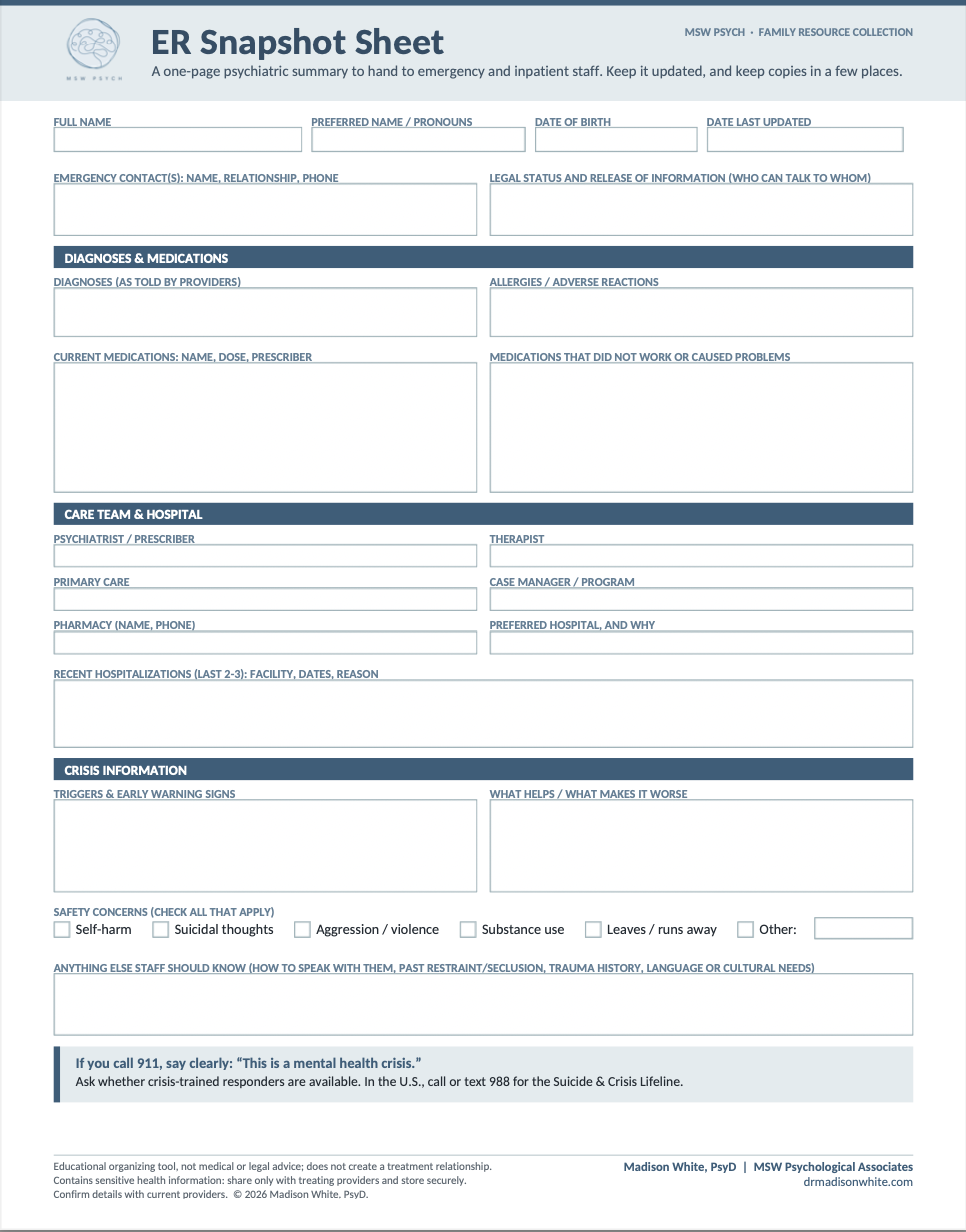
The ER Snapshot Sheet puts the essentials on one page, so you can hand it over instead of trying to recall it all.
What it covers
Name, date of birth and emergency contacts
Release of information and legal status
Diagnoses, allergies and current medications
Medications that did not work or caused problems
Care team and preferred hospital
Recent hospitalizations
Triggers, early warning signs, and what helps
Safety concerns and anything else staff should know
How it works
Fill it in on your computer or print it and write by hand.
Ideally complete it while things are calm, together with your loved one when possible.
Keep copies on your phone, in your bag, and wherever your loved one agrees.
Update it when medications or providers change.
Good to know
It contains sensitive health information once filled in. Share it only with treating providers, and store it securely.
It is an educational organizing tool. It is not medical, legal or crisis advice and does not create a treatment relationship.
In an emergency, call 911. In the U.S., call or text 988 for the Suicide & Crisis Lifeline.
Created by Madison White, PsyD, licensed clinical psychologist, MSW Psychological Associates.
Next step (optional line at the bottom):
Want more? The Complete Psychiatric Treatment History Organizer is a 28-page workbook for tracking the full history, planning for crises, and preparing for appointments and family meetings.